After finally getting over the fact that I no longer need to worry about writing logs on everything I do and how to select which elements of the syllabus to match it to, I thought it would be useful to reflect on my Pathway to Chartership (P2C) experience.
Like any journey there are highs and lows but, with a good support network, you’ll make it out the other end just fine. As my mentor always said: ‘It’ll be alright in the end and if it’s not alright, it’s not the end yet’ and silver linings were found in every problem I encountered along the way.
The whole experience really made me more aware of the work we do as Landscape Architects and the impact we can have on projects to make them so much better. Learning the theory behind why we do what we do and, especially in such trying times for the environment and biodiversity, was really insightful. I often found myself, in everyday life, making reference to things I’d learnt about environmental legislation, the planning system, or contract law – much to my family and friends’ annoyance towards the end…sorry, not sorry!
How did I prepare for the exam?
Exams have never been a strong point of mine. Committing to things to memory has been a struggle I’ve always faced and have yet to find a single guaranteed method which worked for me. Instead, I used a variety of methods to learn the information required, depending on where I was in the journey. I started with reviewing and reading through resources people recommended and making notes as I read.
Before I started the pathway, and throughout my couple of years on the journey, I attended the Yorkshire &
Humber branch P2C sessions. These happen twice a year and are normally five 2-3 hour sessions, spread across five weeks, where people are assigned a question from the syllabus to answer to the rest of the group and then receive feedback on their answers from Chartered Landscape Architects. These sessions were really useful for learning from other people who work in different practices and in other areas of Landscape Architecture.
As I started to near the exam, I condensed my research notes into flashcards and had family and friends test me, whenever we had the chance. I carried around my flashcards everywhere I went, just in case I had a spare few minutes to whizz through some questions. I also found study groups and mock exams very beneficial at this point, to practice giving concise and factual answers to people I didn’t work with. Study groups were also great to support and reassure each other as we approached our exam dates.
What does it mean to be a Chartered Landscape Architect?
 One question most candidates get told to prepare is ‘Why do you want to become a Chartered Landscape Architect?’. In my exam this was one of the first questions I was asked, to get me settled into the exam. For me, as a professional, being chartered was the next step in my career and a way to further my education in the real-life application of landscape architecture. On a personal level, it was a goal I had set myself a many years ago, when I started my journey to become a landscape architect and one my family and friends around me supported and encouraged me to achieve.
 Chartered Landscape Architects and Registered Practices come with an additional reassurance to the client that we have a certain level of knowledge and understand our duties to them and the landscape. It assures them that we have some experience in the field and will act professionally in line with our governing body’s (The Landscape Institute) Code of Practice and published guidance.
As I started to near the exam, I condensed my research notes into flashcards and had family and friends test me, whenever we had the chance. I carried around my flashcards everywhere I went, just in case I had a spare few minutes to whizz through some questions. I also found study groups and mock exams very beneficial at this point, to practice giving concise and factual answers to people I didn’t work with. Study groups were also great to support and reassure each other as we approached our exam dates.
What does it mean to be a Chartered Landscape Architect?
One question most candidates get told to prepare is ‘Why do you want to become a Chartered Landscape Architect?’. In my exam this was one of the first questions I was asked, to get me settled into the exam. For me, as a professional, being chartered was the next step in my career and a way to further my education in the real-life application of landscape architecture. On a personal level, it was a goal I had set myself a many years ago, when I started my journey to become a landscape architect and one my family and friends around me supported and encouraged me to achieve.What does it mean to our clients to have a Chartered Landscape Architect involved in their project?
Chartered Landscape Architects and Registered Practices come with an additional reassurance to the client that we have a certain level of knowledge and understand our duties to them and the landscape. It assures them that we have some experience in the field and will act professionally in line with our governing body’s (The Landscape Institute) Code of Practice and published guidance.With the rise of AI, many people are using it to give them professional advice, instead of paying for professional consultant services. But, 'What is the difference between asking AI and asking 2B?' you might ask. We would say:
Our CMLIs (including me!) can provide thoughtful, joined-up solutions to problems, where AI cannot interpolate the complexity of the shifting interrelationships involved in landscape projects. Our uniquely human skills include:
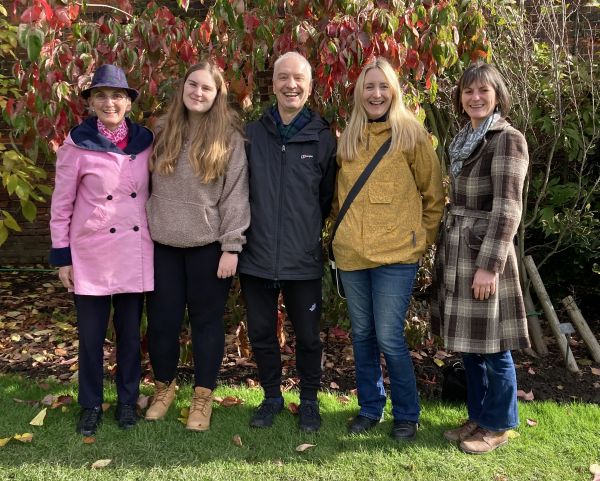
Our CMLIs (including me!) can provide thoughtful, joined-up solutions to problems, where AI cannot interpolate the complexity of the shifting interrelationships involved in landscape projects. Our uniquely human skills include:
- Tailored to your specific project and site constraints
- We can come and look at the site in person to really understand what’s there
- We are able to get a feeling for the spirit of the place and cultural aspects
- Friendly, approachable team to talk to and discuss your ideas
- Able to provide graphics to help explain your vision
- Many years experience in the industry, including volunteering for the Landscape Institute and for environmental charitable organisations
- Lots of factual knowledge, gained from reading around the subject in books and journals and attending CPD events with industry experts
- More environmentally sustainable – did you know AI uses large amounts of potable water and energy per search?